
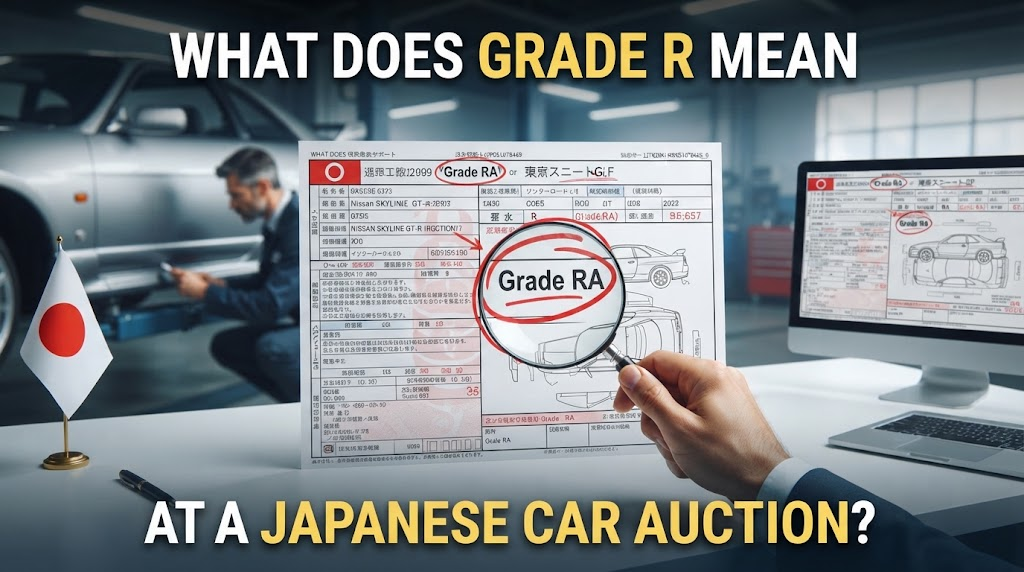
What Does Grade R Mean at a Japanese Car Auction? (Complete Guide)
If you are browsing Japanese used car auctions (such as USS, TAA, or USS-affiliated networks), you will quickly notice that vehicle grades dictate everything from price to demand. While clean grades like 4, 4.5, or 5 are straightforward, seeing Grade R (sometimes listed as RA) often raises a red flag for buyers.
Does Grade R mean the car is a total wreck? Should you avoid it completely, or can it be a smart bargain? This guide breaks down exactly what Grade R means, how to interpret it, and what you need to check before bidding.
1. What is a Grade R Car?
In the Japanese car auction system, Grade R (or Grade 0 / A depending on the specific auction house) indicates that the vehicle has a history of accident damage and has been repaired.
Unlike normal used cars (Grades 3 through 5) which have clean structural histories with only minor cosmetic blemishes, a Grade R car has previously sustained structural or panel damage. This damage was fixed before the car was entered into the auction.
- Grade R: Generally indicates that the car suffered a more significant impact, requiring structural or frame repairs.
- Grade RA (or sometimes RB): Usually denotes minor accident damage (such as a light fender-bender or bolt-on panel replacement) that has been professionally repaired.
2. Why Are Cars Given Grade R?
Not all Grade R cars are created equal. Inspectors assign this grade based on structural impact history, but the underlying reason can vary:
- Structural / Frame Repair: A previous collision affected the inner frame, chassis rails, core support, or pillars, which were subsequently welded, straightened, or replaced.
- Heavy Modifications: At certain auction houses, heavily modified vehicles (aftermarket body kits, custom roll cages, altered chassis components) may sometimes be flagged or categorized under modified/special structural review rules similar to R.
- Panel Replacements: Replacing major bolt-on or welded exterior elements (like a quarter panel or roof skin) can prompt an R designation, even if the core mechanical structure was barely touched.
3. Pros and Cons of Buying a Grade R Vehicle
Purchasing a Grade R car comes with a unique set of trade-offs that every importer or retail buyer should weigh:
Pros:
- Significantly Lower Price: Grade R cars usually sell for much less than their clean-grade equivalents, offering massive cost savings.
- Access to Rare Models: For performance JDM classics (like older Skylines, Silvias, or Supras), finding a clean, accident-free example can be rare and extraordinarily expensive. Grade R options are often far more abundant.
- Professional Repairs: Japan has stringent maintenance standards, and many repairs are executed cleanly by professional body shops.
Cons:
- Variable Repair Quality: While some repairs are factory-standard, others can be poorly done, hiding structural weakness or future rust.
- Resale Stigma: Even after a flawless repair, a Grade R title carries a historical stigma that can affect future resale value.
- Import/Compliance Risks: Some destination countries have strict local registration laws regarding structural repair histories.
4. How to Decode the Auction Sheet for a Grade R Car
Never judge a Grade R car solely by its grade letter. The Japanese Auction Sheet is your ultimate source of truth.
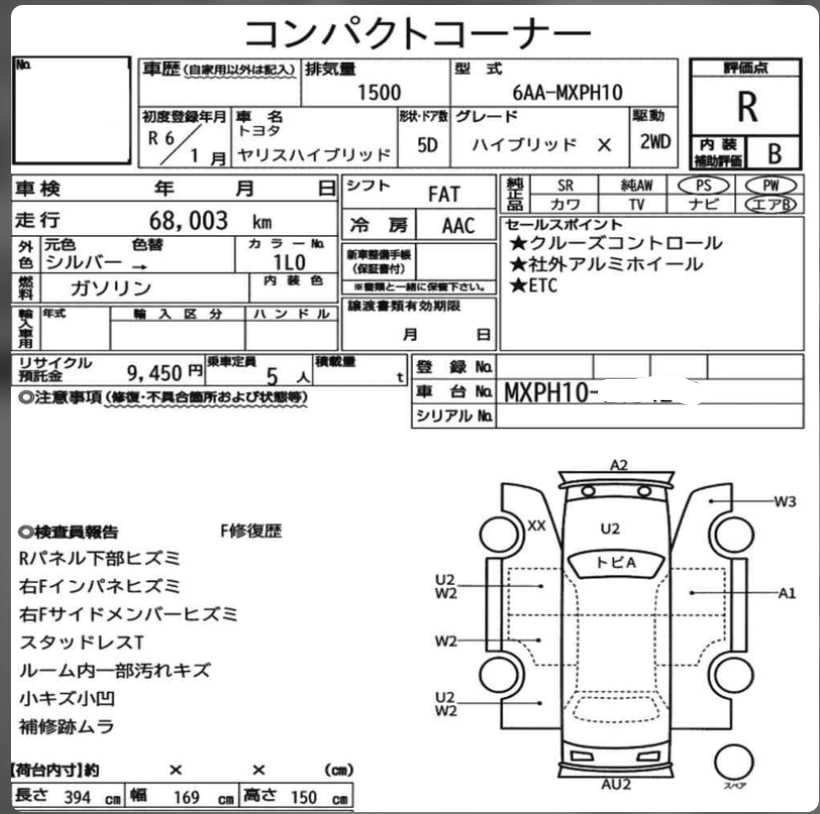
- Look at the Inspector's Diagram: The auction sheet features a car outline showing symbols like W (weld/repair), XX (replaced panel), or S (rust/corrosion).
- Read the Inspector’s Notes: The Japanese text box will specify the extent of the repair (e.g., “Core support replaced” vs. “Rear floor panel repaired”). Professional translation is vital here to know if the damage was minor or severe.
Pro Tip: If a car is graded RA and the notes indicate only a minor front bumper or fender bolt-on replacement, it is often a very safe buy compared to an R grade with major chassis straightening notes.
Conclusion: Should You Buy a Grade R Car?
Buying a Grade R car is not a dealbreaker, provided you know what you are buying. If you are looking for a clean, daily-driven family commuter, it is usually safer to stick to Grades 4 and above. However, if you are searching for a project car, a track toy, or a budget-friendly JDM import where savings outweigh paper purity, a Grade R car with minor, well-documented repairs can be an incredible value.
Always get a full translation of the auction sheet and rely on trusted inspection agents before placing your bid!