Japanese Car Auction Grades Explained: 3.5, 4, 4.5, 5, R and RA
Buying a used car from Japan can be a good way to find a well-maintained vehicle with documented history. However, before bidding on any car, one of the most important things to understand is its Japanese auction grade.
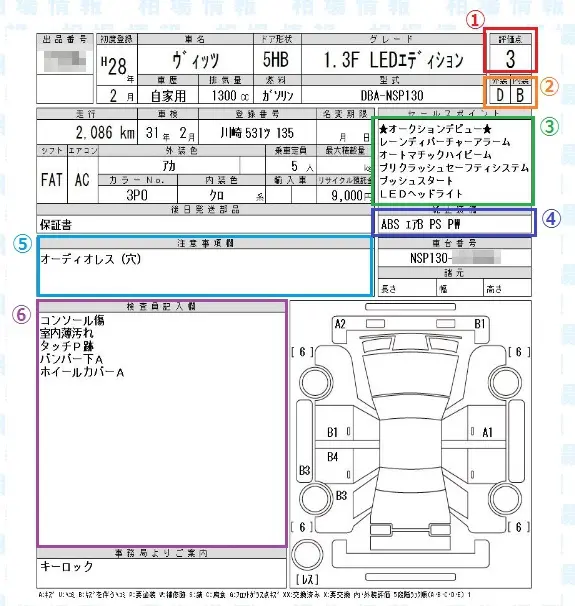
The grade gives you a quick indication of the vehicle's overall condition, but it should never be used on its own. A proper assessment should also include the auction sheet, inspector's comments, body diagram, mileage and detailed photos.
This guide explains the most common grades — 3.5, 4, 4.5, 5, R and RA — and what they can mean when choosing a vehicle for import to Cyprus.
What Is a Japanese Car Auction Grade?
Before a vehicle is offered at many Japanese auctions, it is inspected and an auction sheet is prepared.
The sheet normally contains information such as:
- overall auction grade;
- exterior and interior condition;
- mileage;
- scratches, dents and repairs;
- replaced body panels;
- equipment and options;
- inspector's comments;
- accident or repair history.
The grading system is not completely identical across every Japanese auction house. Therefore, a Grade 4 at one auction should not automatically be assumed to be identical to every Grade 4 elsewhere. The auction sheet itself remains essential.
Japanese Auction Grades at a Glance
GradeGeneral conditionWhat you can typically expect
5
Excellent
Very low wear, very clean condition, usually low mileage
4.5
Very good
Minor cosmetic imperfections, generally very well maintained
4
Good
Normal used condition with some scratches, dents or wear
3.5
Average
More visible cosmetic wear; repairs or preparation may be required
RA
Repaired
Vehicle has repair history, often described as lighter than R depending on auction
R
Accident/repaired
Vehicle has a declared accident or structural repair history
These grades are a useful first filter, not a guarantee of condition.
Grade 5 — Excellent Condition
Grade 5 vehicles are normally among the best used vehicles available at auction.
You would generally expect:
- very low mileage;
- very minor exterior imperfections;
- a particularly clean interior;
- little evidence of normal wear.
For buyers who want a vehicle close to new condition, Grade 5 is attractive. The disadvantage is straightforward: better condition normally means a higher auction price.
A Grade 5 should still be inspected carefully. The number alone doesn't tell you everything about tyres, mechanical condition, optional equipment or every small defect.
Grade 4.5 — Very Good Condition
For many buyers, Grade 4.5 represents an excellent balance between condition and price.
The vehicle may have minor scratches or small cosmetic imperfections, but overall it should present very well.
For example, imagine a three-year-old Toyota with 25,000 km:
Grade: 4.5
Interior: B
Body diagram: A1 on rear bumper
An A1 marking generally indicates a small scratch. In a case like this, a minor bumper scratch alone would not necessarily make the vehicle a poor choice.
This is why we look at the whole auction sheet rather than only the grade.
Grade 4 — Good Used Condition
Grade 4 is extremely relevant for buyers looking for value.
A Grade 4 car is a normal used vehicle and can have visible signs of use such as:
- scratches;
- small dents;
- stone chips;
- interior wear;
- previous cosmetic paintwork.
For example:
Grade: 4
Interior: B
Mileage: 55,000 km
Diagram: A2 front bumper, U1 left door
This could still be a perfectly sensible vehicle to buy if the defects are minor and the price reflects its condition.
A clean Grade 4 can sometimes make more financial sense than paying a substantial premium for a Grade 4.5 or 5.
Grade 3.5 — Inspect More Carefully
Grade 3.5 doesn't automatically mean a bad car.
However, you should expect more noticeable wear or defects than on Grade 4 or 4.5 vehicles. Auction sources describe Grade 3.5 vehicles as potentially having noticeable scratches, dents, stains or repair marks.
This is where detailed inspection becomes particularly important.
For example:
Grade: 3.5
Mileage: 90,000 km
Exterior: C
Interior: C
The price might look attractive, but you should calculate whether bodywork, interior preparation, tyres or other work will be required after arrival.
A cheaper auction price does not necessarily mean a cheaper finished car.
Grade R — Repaired Accident Vehicle
Grade R requires much more attention.
It generally indicates that the vehicle has a declared accident/structural repair history.
That does not automatically mean the vehicle is unsafe or unusable. The important questions are:
What was damaged? What was replaced? How extensive was the repair? Was structural work involved?
Two R-grade cars can be completely different.
One may have relatively limited previous damage that was professionally repaired. Another may have experienced substantial structural damage.
This is why we would never recommend evaluating an R-grade vehicle simply because its auction price is attractive.
Grade RA — What Is the Difference?
RA also indicates repair history.
Some auction systems use RA for vehicles where the repair history or structural repair is considered lighter than a typical R-grade vehicle. However, terminology and grading criteria vary between auction houses.
Therefore, don't use this rule:
RA = safe, R = bad.
Instead, use:
R or RA = investigate the repair history before bidding.
The inspector's notes and body diagram become much more important than the letter itself.
Don't Forget the Interior Grade
The overall auction grade isn't the only rating worth checking.
Auction sheets commonly provide a separate interior condition grade, often using letters from A to E.
Interior GradeTypical meaning
A
Excellent / exceptionally clean
B
Good, normal minor wear
C
Visible wear, stains or other signs of use
D
Significant wear, dirt or damage
E
Very poor/severely damaged interior
For example, 4.5/B can be a very attractive combination: strong overall vehicle condition with normal minor interior wear.
But again, always read the inspector's comments.
The Grade Is Not Enough
One of the biggest mistakes when importing a Japanese car is searching only for Grade 4.5 or higher.
Before bidding, check at least:
Auction grade → mileage → interior grade → body diagram → inspector comments → repair history → detailed photos.
The body diagram can reveal scratches, dents, paintwork and replaced panels that aren't obvious from the headline grade.
Inspector comments can be even more important. Real auction-sheet translations can contain notes about corrosion, oil leaks, non-working air conditioning, worn interior components and replaced panels — information that the overall grade alone cannot communicate.
Which Japanese Auction Grade Should You Choose?
For most private buyers importing a car to Cyprus, Grade 4–4.5 is often the most interesting area to search.
Grade 4.5 is preferable when condition is the priority.
Grade 4 can offer very good value if the auction sheet is clean.
Grade 3.5 can also make sense, but the condition and expected repair costs should be evaluated carefully.
Grade 5 is excellent, but you may pay a considerable premium.
With R and RA, the previous damage and repair history should be understood before any bid is placed.
Ultimately, a clean auction sheet matters more than chasing one particular number.
Frequently Asked Questions
Is Grade 4.5 good at a Japanese auction?
Yes. Grade 4.5 generally indicates a vehicle in very good used condition with relatively minor imperfections.
Is Grade 4 safe to buy?
Grade 4 can be an excellent purchase. Check the auction sheet, damage diagram, inspector's comments, mileage and photographs before deciding.
Should I avoid Grade 3.5?
Not necessarily. Grade 3.5 can offer good value, but expect more wear and examine the defects carefully.
Does Grade R mean the car was in an accident?
Generally, R indicates declared accident/structural repair history. The exact previous damage should be investigated before purchase.
Is RA better than R?
Some auctions use RA for lighter repair history, but grading standards vary. Never make a purchase decision from R versus RA alone.
Does a high auction grade guarantee a perfect car?
No. Auction grades are useful condition indicators, not warranties. Always examine the complete auction sheet and inspection information.
Importing a Car from Japan to Cyprus
At DESIREAUTO , we check vehicles before bidding rather than selecting a car based only on its auction grade.
We can help with the full process — searching Japanese auctions, checking auction sheets and vehicle condition, purchasing the vehicle, shipping it to Cyprus and assisting with the import process through to registration.
Before placing a bid, ask us for the auction sheet and vehicle inspection details.
